
First off, thank you for considering donating to Christian charities. Many of us need your financial support to see how we can sustain the programmes that we do.
Don’t you have a grant?
You’re right to ask that. When I was a freshly graduated social worker, I also thought grants would cover everything. But it wasn’t always the case, as there would undoubtedly be some overheads that were not fully covered by grants.
That’s why charities are encouraged to fundraise, as it is healthy to have a certain degree of community copayment, rather than just depending on the Government to provide everything.
Why fund Christian charities?
Of course, your next question might well be,
Why a Christian charity, when there are so many other charities out there?
Because as Christians, we believe in the redeeming power of Christ, and how it is God who does the work, and not us.
Which charities?

Support The Helping Hand, for resilient societies
In my first month at The Helping Hand, I was surprised at how Christ-centred much of the work was. There would be chapel on Tuesday and Friday, and then devotion classes on Wednesday and Thursday. We personally believe that if we didn’t place Christ at the centre of the resident’s transformation, they would not change.
But why work so hard with ex-offenders? Because we fundamentally believe that helping these ex-offenders lifts not just a small segment of society, but the whole of society. When the public sees that the ex-offenders lift themselves up from such a deep and dark place, it serves as a reminder that no matter where we come from, as long as we’re willing to work hard, it will always change for the better.
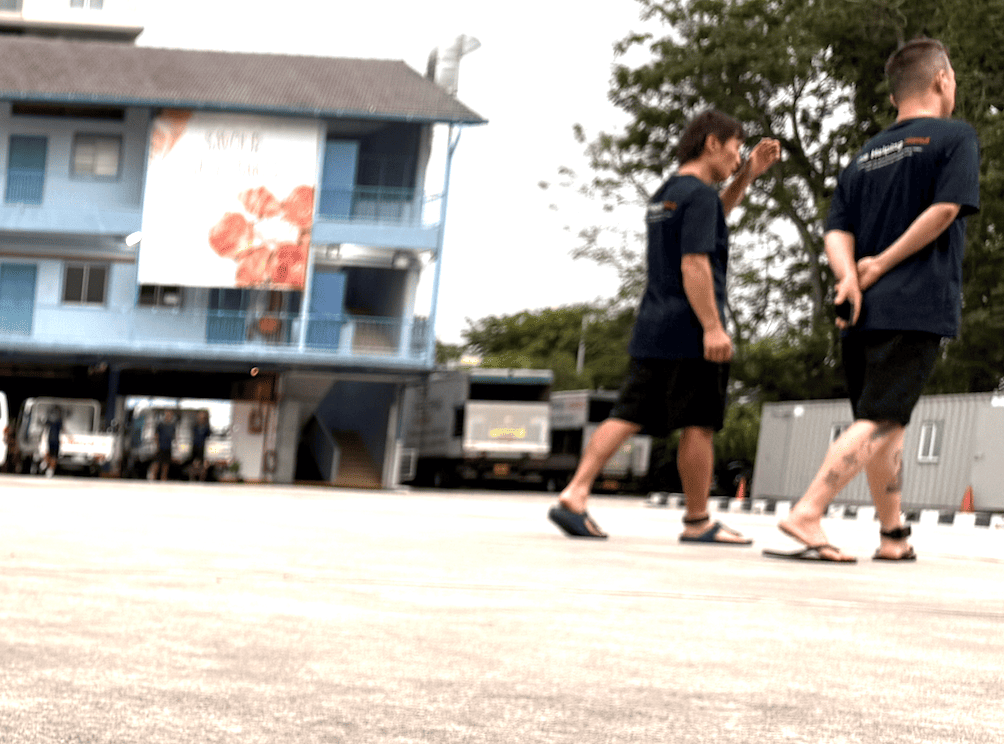
One part you’d enjoy is the Thanksgiving portion of Tuesday chapel services. One recent sharing was with James (not his real name), who shared about how he’d spent more than 20 years in prison. Each time he came out, he just felt lost, and completely flummoxed by how fast society had changed.
Feeling the deep anxiety of not having a job, and feeling like he didn’t belong in modern day society, he simply turned to the next best option – drugs. But this time, there was a change when he came here. He realised he could find a safe place to continue working out his change.
Today, even though we have a grant from the Singapore Prison Service, this does not fully cover all our costs, because we wish to do more for our residents, so that they create the lasting change they see.
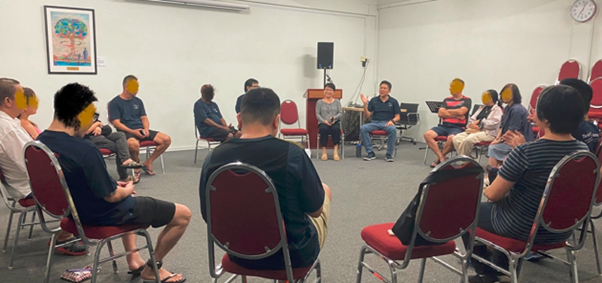
Another extra thing we do is focusing on the family. There was a time when I sat in on one of their Saturday family support groups. That evening, one man told us about going home during Chinese New Year, and feeling awkward when he saw his nieces. They seemed to have grown up, and because of the time he’d spent in prison, they seemed more distant. As his sister heard this, she began to share about how they’d still love him, and that he did not need to feel this way.
Another example. Monthly sports for our residents. We know that much of this work has often been difficult because our residents don’t have healthier coping mechanisms. Whilst most of us would turn to sports, or to talking to a friend when we need help, they might turn to substances.
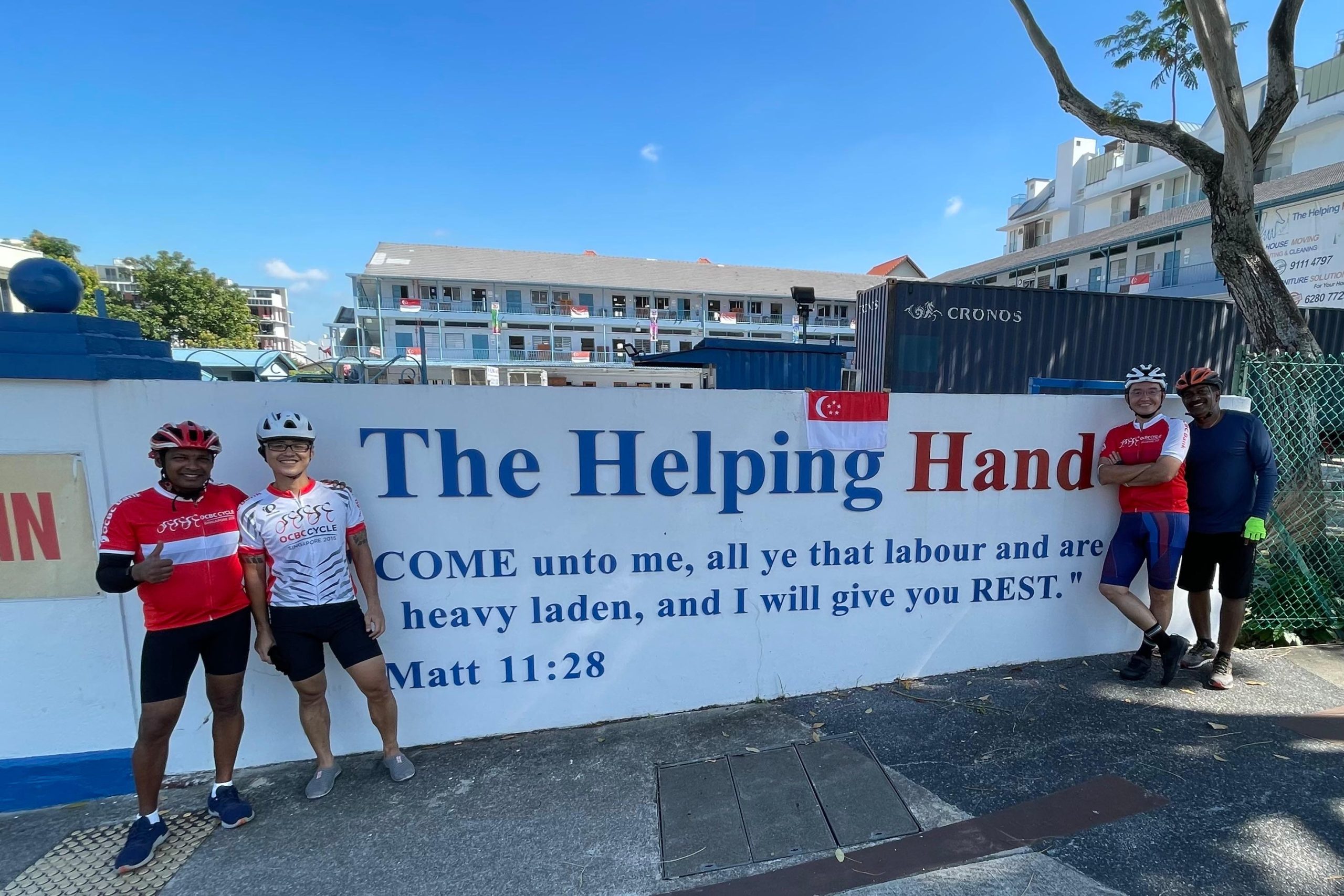
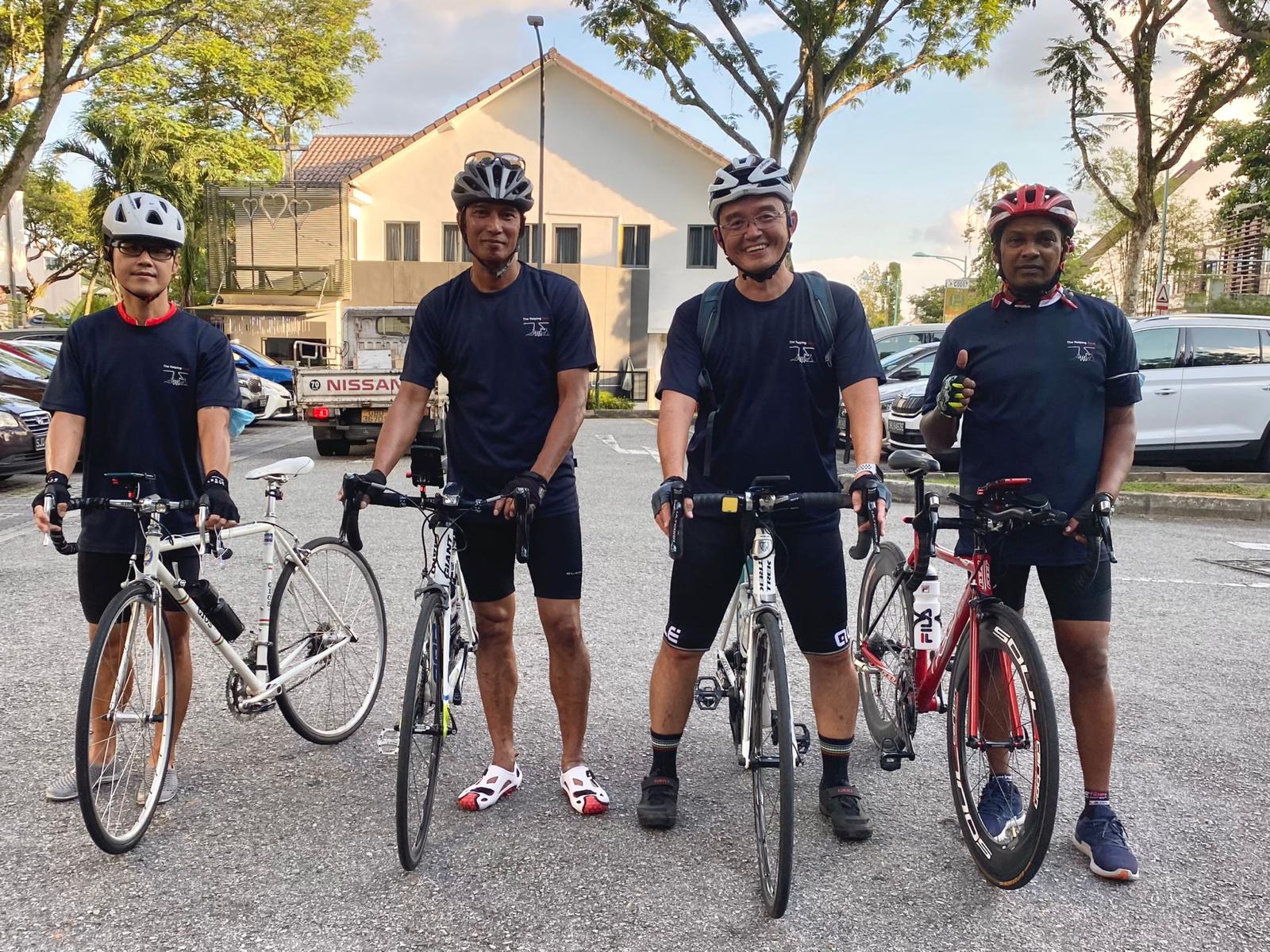
Over the past few weeks, in the leadup to the annual Ride to Restore on 18 April, we’ve been putting them through conditioning, hoping that they’d be ready for the day where they ride 50km.
But why ex-offenders?
Many donors we meet often have this resistance, thinking that ex-offenders are doing their time, getting what they ‘deserve’. What we often don’t see is the potential within them that’s gone undeveloped because they started acting out in school, when they started facing difficult problems at home.
Many of our residents have told us about the broken families they come from, and how that led them to start ‘acting out’ in class, to get attention, in place of a parent who would not give them the attention they needed.
So why? Because we know they’re capable of so much more.
In another role I play as a trainer, my job is to see potential. When I first meet Joe, I’m surprised at his voracity for insight. He keeps wanting to know more and more, and asks strangely insightful questions about Christ, and the world. Like
if God was perfect, then how did sin enter the world?
When I share about how we do the sales and marketing for our businesses, he immediately makes nifty observations on where we could improve.
I didn’t expect this when I first saw him, especially if you see the dragon tattooed on his forearm. His A Level results are in fact comparable to mine. So how is it that he’s here, and I’m there?
In a Singapore that already has a declining working population, we don’t want to return more people into prisons, where they would incur a cost. We want to help them to change permanently, for the better, so they add to the world what they have.
Singapore Anglican Community Services (Integrated Employment Services) for supporting those with mental health conditions to return to work
In my second job, I worked for Singapore Anglican Community Services, in their Integrated Employment Services. They did great work in terms of helping those who had mental health conditions to return back to work. This was a clear gap in the community, but there was no ready funder for this.

It did not neatly fall into each individual government ministry’s lap, and so whilst there was part-funding, there was no full funding. In the end, they had to fundraise to continue this work.
I recall my own time returning to the workforce from depression. I was down, and didn’t know where to start. I needed a structure to get me out of my house, and into the community. Whilst the easiest structure was employment, often that’s not the easiest to get as it felt too stressful for what I was realistically capable of.
Enter IES, which introduces daily classes called WRAP, where they teach coping techniques and employability skills, like how to interview. This is particularly important, as many clients often ask questions like:
do I have to declare my mental illness to my employer?
What happens if I have a breakdown at work?
WRAP gives clients the confidence to go back into the world of work.
Montfort Care, if you’d like to support the elderly with innovative programmes
But what happens when you’re finally out of the world of work? Another Christian charity, Montfort Care, has been doing sterling work to introduce innovative programmes for the elderly, such as having a community theatre in the Active Ageing Centre.
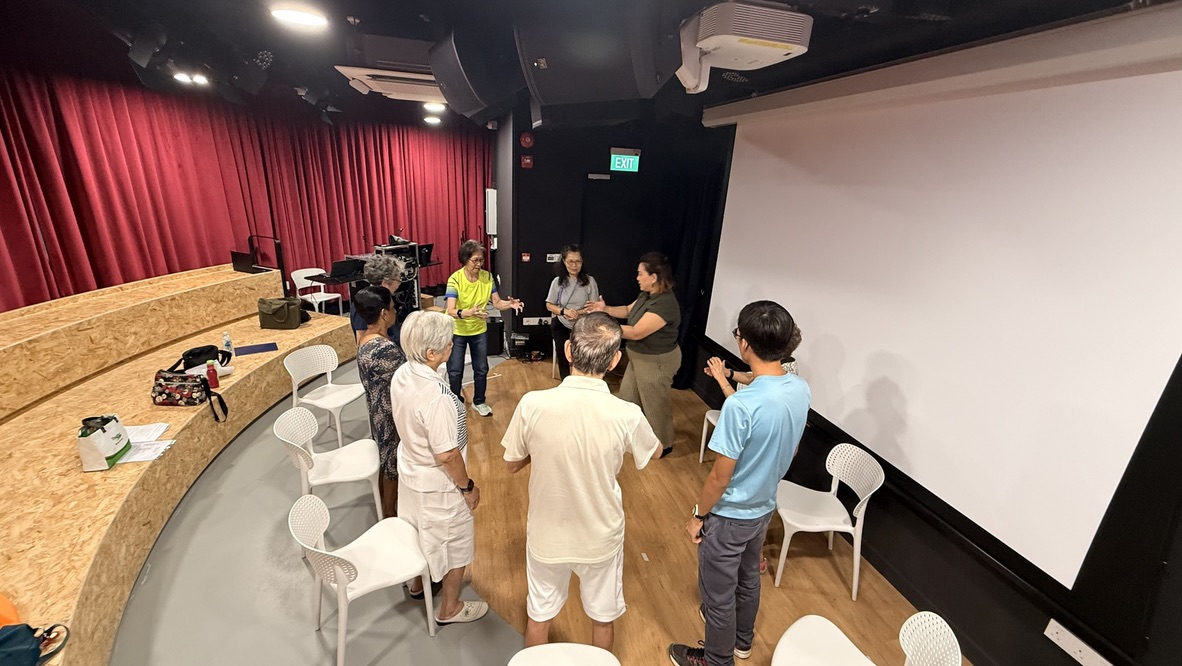
When I visited them in November 2025, I was startled by what I found. You’d expect that the elderly would be tight-lipped, and quiet. But they were bustling and raring to go, from the initial warmup exercises, to the final rehearsal before their big performance for the community.

They have done something unusual – to build an AAC that people love going, rather than just having the usual activities like Bingo, Rummy-O, and the art and crafts. All these are important, but Montfort Care has reimagined what this work can be like.
Bethesda Care for humble, roll up your sleeves approach
Bethesda Care, is seeded by Living Sanctuary Brethren Church, who have been doing good in Hougang for the last 50 years. Founded by Senior Pastor Lawrence Chua, they are the pioneers of door knocking on the estates around them, and striving to bring them to church.
Today, Bethesda Care focuses on children, families, the elderly, and those with mental health problems.
They’re humble with their work, but deeply genuine. They roll up their sleeves and get the work done. They don’t just complain.

Donate, to spread God’s work
At the end of the day, we know that each of these ministries have been sustained by God, and not by our own human effort. God seeds the work, and we’re merely there to water it and make it grow.
Of course, each year, there are niggling worries about how much we can raise, but we always trust that as long as God is at the centre of our work, with donors and supporters like yourself, work will continue to impact those who need it the most.