
Melody is a bundle of joy and optimism. When you first meet her, you’d be surprised by how much she’s doing, and how she still manages to stay present, in the moment.
The moment we sit down, she apologizes for being late, and quickly types a message to close off the call she was on.
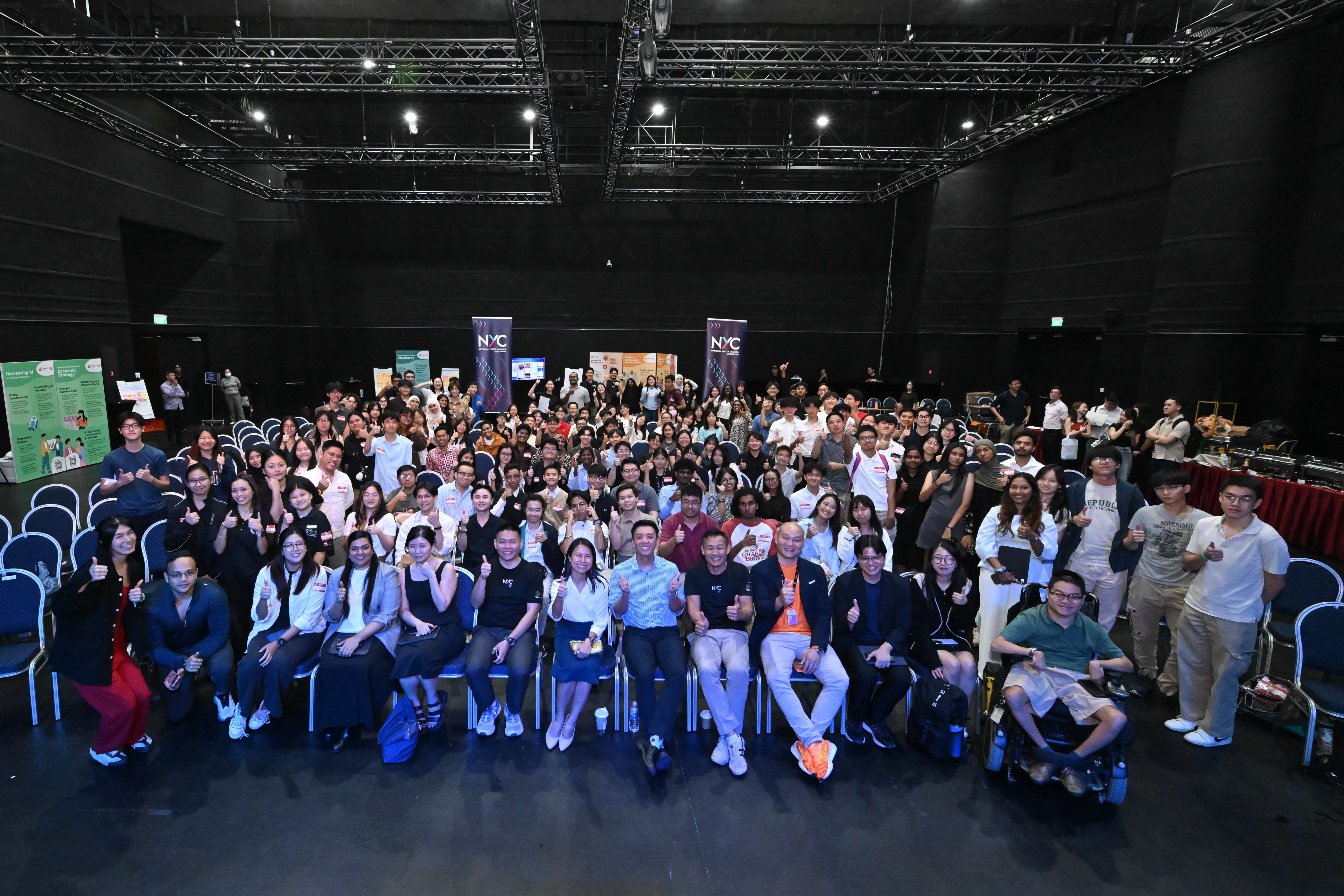
I first met her at a National Youth Council’s Post-Budget Dialogue, where she facilitated the discussion between two political office holders and the youths about what they thought and felt about the Budget.
She’s unfazed by the superstar power of these two politicians, and proceeds to guide the room into a deeper conversation about how exactly we youths, and the government, can better work together in these trying times.
She’s not unfamiliar with interacting with big personalities, especially in her current role in venture capital, where she has to manage the expectations of founders, together with venture capitalists, building out cases for why the VC should invest in these promising entrepreneurs.
When I meet her for this interview, one of my first questions is how she’s managed to find so much courage to do these things. Her answer? “Being willing to try”. Her CV reads like a model that Singapore has been trying to push young people to have. Study abroad, work abroad, and come home – eventually.

When she was in Yale-NUS, she started dreaming of a time when she could move to work in Japan. Even when she was in school, she was already immersed in Japanese subculture, and knew that she eventually wanted to work there someday. But she didn’t exactly know how. She started studying Japanese intensely. Whilst in Yale-NUS, she went for all the networking events she could go, making friends and trying to understand how she could get a job in Japan. In her final year, she applied for dozens of jobs, and started interviewing for them.
How far are you willing to go to push yourself?
She recalls,
There was one aircon company who asked me if I was an engineer. The answer was no, I was not an engineer.
But I could be if they wanted me to be. That was how far I was willing to go.
But I can’t quite get why she put herself through all this, particularly when there are easier options here. Get a simple corporate job in Singapore, and get onto the Singapore bandwagon. University, work, BTO, marriage, CPF, die.
Yet Melody knew that there was a very precious window immediately after university.
I had no dependents. My parents were healthy.
I could always do these things later.
So after interviewing for dozens of jobs, she eventually got a job in Japan, and went over.
“How was that?” I wonder. Especially when I had my experiences in Kyoto, for two months, remote working out of cafes and trying to run my annual report design agency. I had been chased out of countless cafes, after sitting there from its opening to closing hours. I sensed that in Japan, they could be stricter with standards compared to Singapore.
Melody admits the early months were hard, but she’d always found friends to help her. She recalled the time when some friends invited her to a faraway town to make noodles. She turned up in that small village, and became one of the two foreigners there, in an intimate setting. Memories like this stick in her mind when she remembers why all that difficulty was worth it.

Pushing oneself, even when it’s not necessary
Because at the end of the day, none of this was necessary. Pushing herself was a choice she actively sought and took. And it reminded me of my own journey to Kyoto. I’d gone there after being sacked with immediate notice. Not knowing where to go, but knowing that I needed a desperate break after 6 years of grinding through working life, I took a flight to Kyoto. All I knew was that I had a friend there. I didn’t know whether she’d be glad to host me, but I just took it anyway.
There was no idea of how I’d survive, but I did it anyway.
So that cold, wintry December of 2024, I ended up in an English cafe I had found through the Meetup app. I was lonely, and desperate for friends.
That evening, as we conversed in broken English and Japanese, I realized for the first time the beauty of what we were doing. It wasn’t just a language exchange. It was deeper than that.
It was the exchange of friendship. And that transcended whatever language we could, or could not speak. Some things were universal. Like me joking about not having any luck with romance. That drew a quick laugh, and I immediately knew that this was a universal challenge that anyone, wherever they lived, could relate to. But that self-disclosure also prompted these two older folks to share about their loneliness being old.
Going with no clear economic purpose
And that was when I began to realize that hey, life didn’t always need to be about producing outcomes. Before I went to Kyoto, I did have a serious think about what the ‘economic’ value of going was. After all, it was 2 months, that I could spend working on something that brought income, or that aligned with life goals such as getting married. But instead, I took the trip, only knowing that I had to return in two months for reservist.
That was a risk. I was definitely worried. My friends were getting BTOs, babies, but here I was, getting on the Boeing, with no idea when I’d return. It felt like the stupidest decision.
But Melody’s experience reminded me of Steve Jobs’ great saying,
sometimes in life, you can’t join the dots looking forward.
You can only join it looking back.
Those two months in Kyoto, however short, gave me the break I needed to figure out what I wanted with life. It definitely wasn’t grinding more, and trying to get more out of life. Instead, it was about slowing down, and learning to live life with greater balance. Melody also saw the experience in Japan as a way for her to better understand how to eventually work with regional teams, when she sources for her deals now.
But it also led her to see her limits. Initially she thought she would stay there for longer. But when she was promoted to become a manager, she realized there were many contextual cues that could no longer be worked through language. There was a lot more subtext and nuance that she no longer could read, and she also began to see how much she missed her family.
So she decided to move back home. And since coming back, she’s continued to push herself to her limits.
What if… is a bad question to ask
When I meet her, she’s just come off a huge month-long effort to plan the alumni dinner of Yale-NUS. There were so many things to coordinate, but when she eventually finished it and saw everyone happy, connected, and feeling like they were connected to a deeper community that would have their back, she breathed a sigh of relief.
Yes, it was hard, but at least it was worth it.
And that’s really all that matters, sometimes. In life, we often have high thresholds before we make any sort of move. We think,
if we could have enough time, enough money, enough resources, I would do X.
What holds us back, is sometimes, ourselves. We make excuses for ourselves. And after a while, nothing changes. Rinse and repeat.
Soon we find ourselves on our deathbeds, wondering about the ‘what-ifs’.
Don’t wait for those. Just do first, and think later.